

Plastic pollution nowadays has become a serious problem in Indonesia, because at least there’s 381 million tons of plastic waste in Indonesia per year. The plastics waste that being produce either ended up in the TPA (Final Waste Place) or being thrown to the environment, and those actions could be potential harm and form a microplastic particle. Microplastic is a polymer with less than 5mm size that concludes from 2 sources of component, the primary and secondary sources. The primary sources were the small pieces of plastics that were made from the beginning, and the secondary sources come from the fragmentation of big size plastics cause by mechanics movements such as waves or photochemical processes from the UV-B light. The existence of microplastics could harm if lurking in the environment, for example, when the microplastics gets eaten by the organism and people through the food chain.
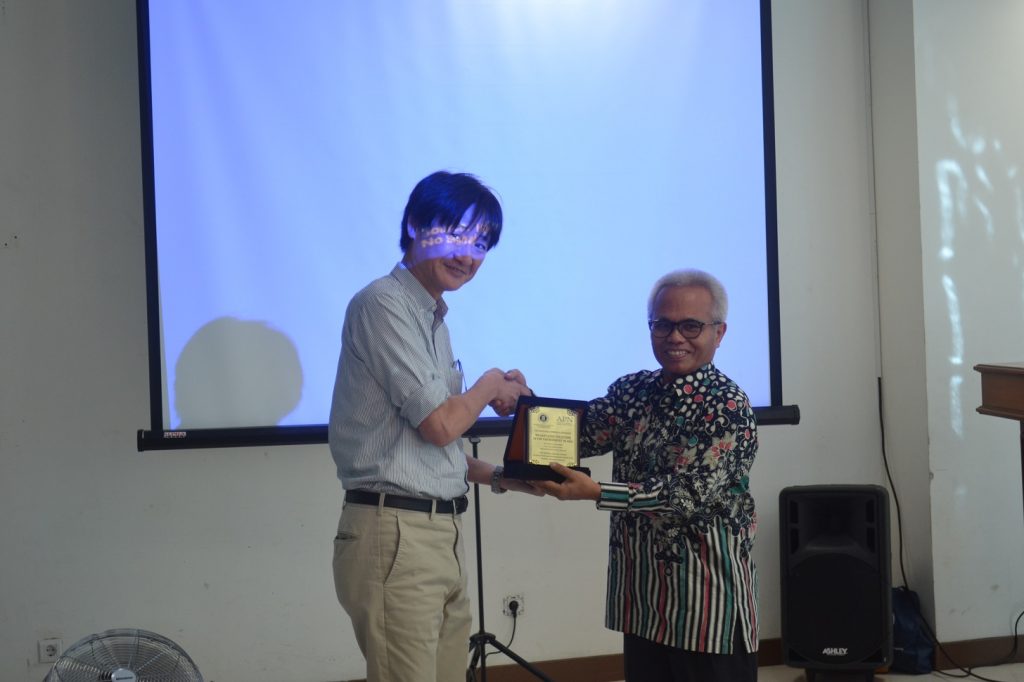
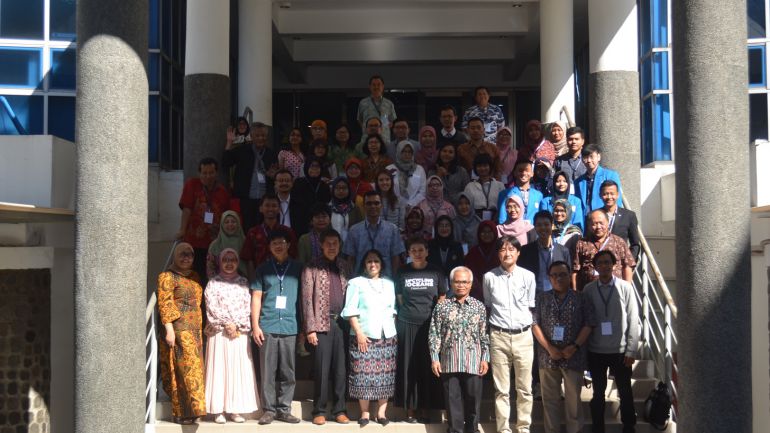
The researches about microplastics are still limited in Indonesia, especially on how the condition and the existence of it in the environment. That’s why Environmental Engineering ITB, started by Emenda Sembiring Ph.D. and in align with PSLH ITB held an International Seminar and Workshop with the title “Microplastic Pollution in the Environment in Asia” on Tuesday, 16th of July 2019 at CIBE building in ITB. The seminar was opened by Dean of FTSL ITB, Prof. Ir. Ade Sjafruddin, Ph.D. and filled by presentations from more than 20 speakers from Japan, Thailand, and Indonesia. Prof Atsuhiko Isobe from the Center for Oceanic and Atmospheric Research, Kyoto University was there as a keynote speaker. This seminar gathers so much newer information around the microplastics topic, from the identification methods, polymer type that has been found, color and the ultimate source of microplastic in the environment such as capsule fertilizer, food wrap all the way to removable synthetic grass that started used by many. And for the second event, the workshop was started with lunch and attended by so much more representative of people, not only from academia representation but also LSM, plastics observer, industry, and the institution of government and people. Started with the strategies of plastic waste management from the government perspective from KLHK, Ministry of Health and coordination for research and analysis of microplastics expert in Indonesia about microplastics, lead by Kemenko Maritim RI. Continued by dissemination of first-year research results of 2 universities in Southeast Asia, SIIT Thailand (Prof. Sandhya Babel) and ITB (Emenda Sembiring, Ph.D. about the existence of microplastics in Chao Praya river in Thailand and Citarum river in Indonesia. The event ended with the discussion regarding the source, side effects, and strategy to reduce the microplastics in the environment.